

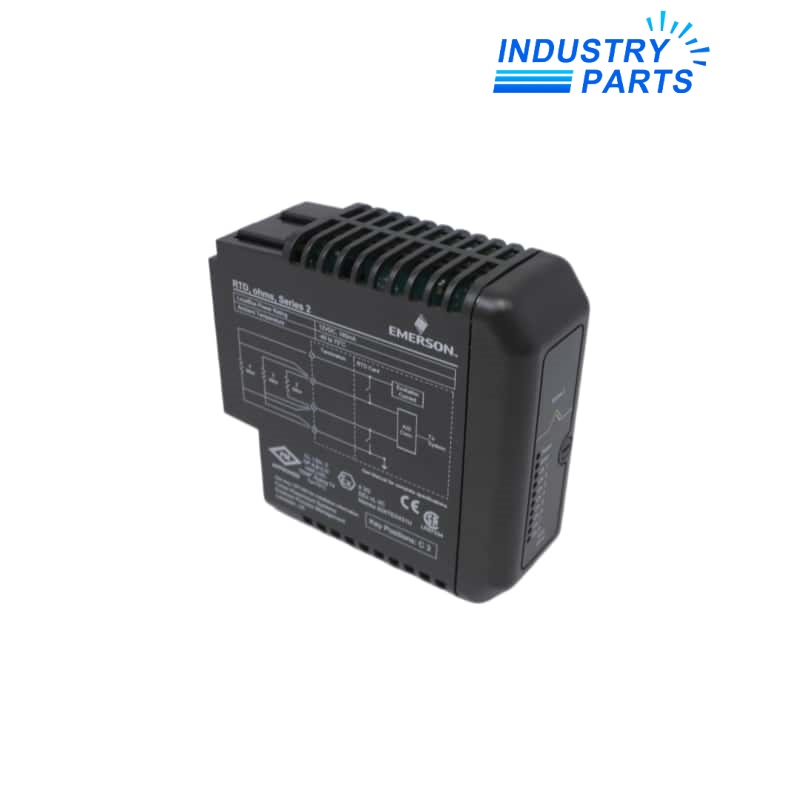
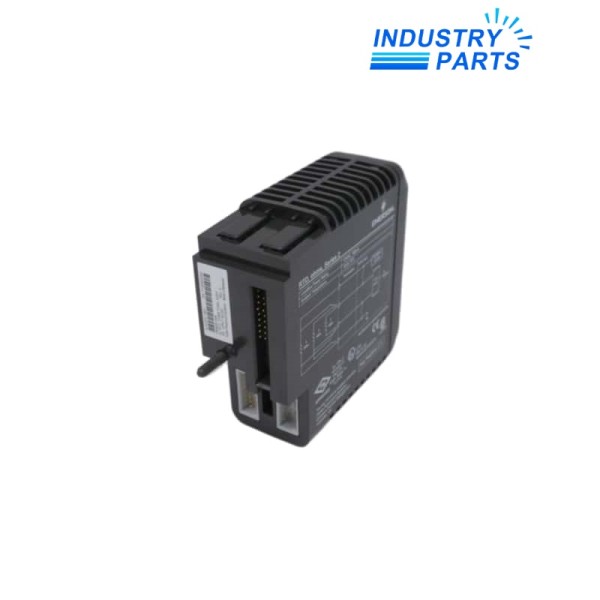
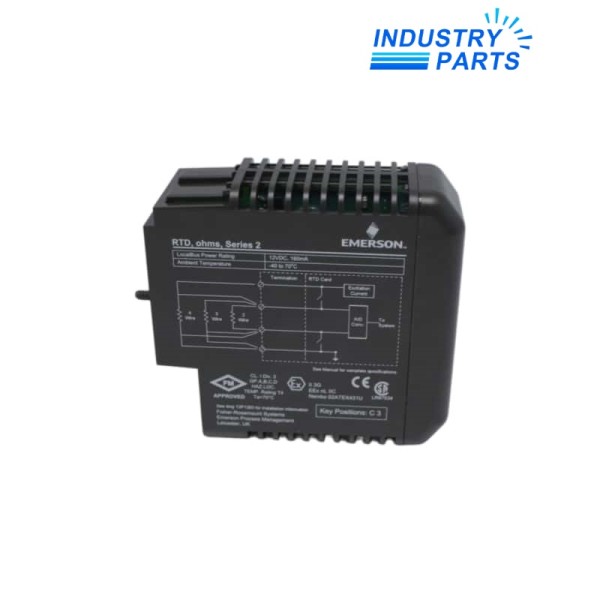
Emerson KJ3225X1-BA2 DeltaV RTD / Resistance Input Card
A keyed DeltaV RTD and resistance input card with documented local-bus demand, G3 classification and exact BA2 execution.
Product Profile
KJ3225X1-BA2 is an Emerson DeltaV RTD / Resistance Input Card. It interfaces resistance-temperature and resistance measurements to the DeltaV I/O subsystem and uses C3 keying in the documented carrier arrangement.
The manufacturer installation instruction identifies 12 VDC local-bus power at 160 mA, a -40 to 70 °C ambient range and ISA-S71.04 G3 airborne-contaminant classification. The BA2 suffix and associated terminal assembly must be verified together.
Technical Data
| Manufacturer | Emerson DeltaV |
|---|---|
| Exact Model | KJ3225X1-BA2 |
| Product Type | RTD / Resistance Input Card |
| Local-Bus Power | 12 VDC at 160 mA |
| Keying Position | C3 |
| Ambient Temperature | -40 to +70 °C |
| Relative Humidity | 5% to 95%, non-condensing |
| Airborne Contaminants | ISA-S71.04-1985 G3 |
| Shock | 10 g half-sine wave for 11 ms |
| Vibration | 1 mm peak-to-peak from 5 to 16 Hz; 0.5 g from 16 to 150 Hz |
| Calibration | No calibration is required by the installation instruction |
| Serviceability | No user-serviceable parts |
| Insertion / Removal | Do not remove or insert with system power energized unless the documented safe procedure permits it |
| Selection Evidence | Exact card, carrier, terminal block, keying and channel map |
System Role
Converts RTD and resistance field measurements for DeltaV control and monitoring.
Uses carrier keying to reduce installation of an incorrect card type.
Provides channel diagnostics and database status through the DeltaV I/O architecture.
Supports harsh industrial environments within the stated ambient and G3 limits.
Compatibility
- Match the C3 keying, carrier and exact terminal assembly before installing KJ3225X1-BA2.
- Confirm every channel sensor type, lead configuration, range and alarm setup from the DeltaV database.
- Remove field energy and system power as required by the approved installation procedure.
- For hazardous locations, verify the site classification and complete approval marking on the installed hardware.
- Do not plan board-level repair or field calibration; the manufacturer specifies no user-serviceable parts and no calibration requirement.
Applications
- DeltaV temperature inputs from qualified RTDs.
- Resistance measurement channels used by the configured DeltaV application.
- Revision-controlled replacement in an established M-series I/O carrier.
FAQ
Why is C3 keying important for KJ3225X1-BA2?
The keying forms part of the carrier compatibility and helps prevent a different I/O card from being inserted into the position.
Should KJ3225X1-BA2 be field-calibrated before installation?
The manufacturer instruction states that the card requires no calibration; acceptance should instead verify sensor simulation, scaling and diagnostics.
What should be backed up before replacing KJ3225X1-BA2?
Save sensor types, lead-wire modes, ranges, alarm limits, channel names, control references and the complete DeltaV database.
Why can a good spare KJ3225X1-BA2 still show a bad channel?
Open leads, wrong two- or three-wire configuration, terminal errors or a mismatched sensor curve can reproduce the fault outside the card.
What evidence is needed for hazardous-area use of KJ3225X1-BA2?
Provide the full labels, carrier and terminal assembly, site classification, field-energy method and applicable installation drawing.
Recommended Models
| APH 40.5V ZR A60 T12 305051 | Merten 6490 29 | 3RV2811-1GD10 |
| DO5611TNE968902R2201 | Siemens 1LE1503-2DB03-4FB4-Z | 2.420.123.20 |
| AI561 1TNE968902R1101 | RA/8080/M/25 | Bosch 041889-109401 |
| Eurotherm 2404 | TSBF/G01/X/4/250/06/X/0/0/000/0/1/S | PCI-733 190976C-04 |
| DRC-4BGN | 4825-0094 2IN/2OUT | LD1LB030 |
| SNAP-24LC-MM | SNL 1001-17 (A) | TRUMPF 2645891 |
| RD6F/UR | 2KG31300VC500CD0 | NBVP 16 R/2-G 48 103099 |
| 6ES5955-3NC42 | PXL-C6/1 | 1LG6183-2MA60-Z |
| MX153 | Euba A2S + Nord SK63L/4HR + OF63L/4HR | X20DO8332 |
| MX-OPT-F2.0-L65-L25 | Siemens 7PA2632-1AA00 | PWA 127610-01 R |


