

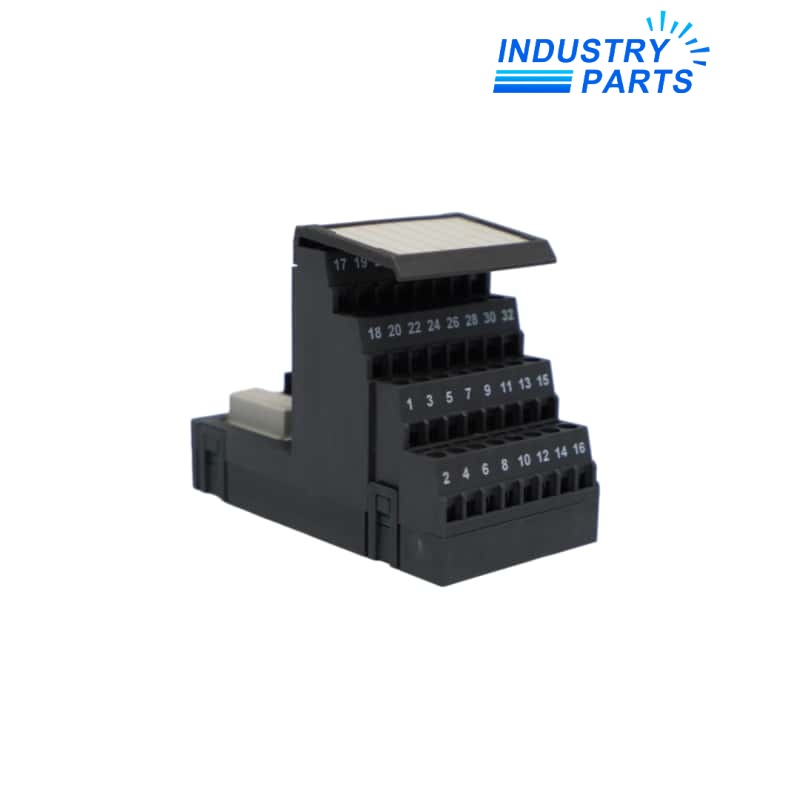
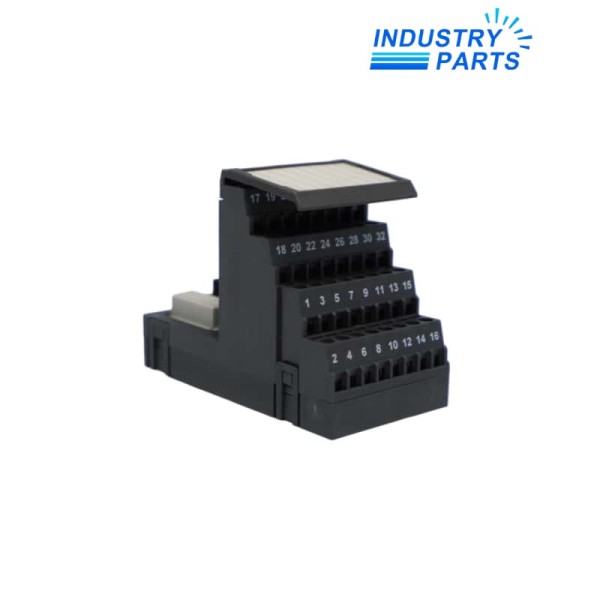
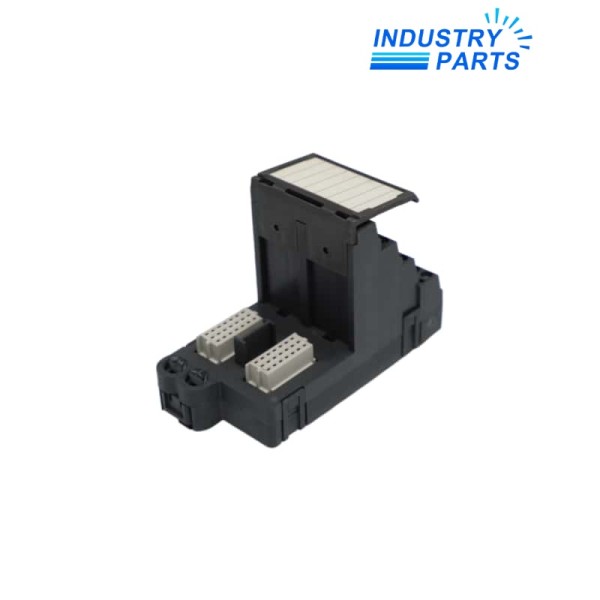
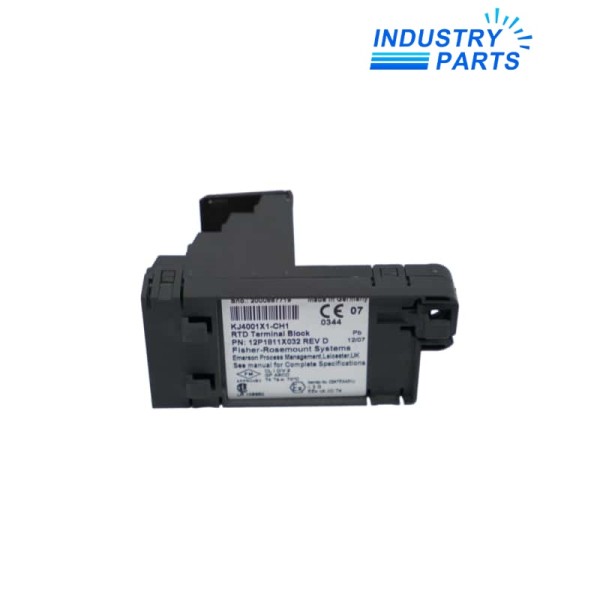
Emerson KJ4001X1-CH1 DeltaV RTD Terminal Block
A DeltaV RTD terminal block with 5 VDC input power, industrial environmental ratings and an exact CH1 wiring identity.
Product Profile
KJ4001X1-CH1 is an Emerson DeltaV RTD Terminal Block used in the documented Electronic Marshalling and related DeltaV installation architecture. It provides the field termination route for RTD measurement wiring and is selected by its exact CH1 label and installation drawing.
The manufacturer instruction lists 5 VDC at 100 mA input power, -40 to 70 °C operation and ISA-S71.04 G3 airborne-contaminant classification. It requires de-energized service under the stated installation conditions and contains no user-serviceable parts.
Technical Data
| Manufacturer | Emerson DeltaV |
|---|---|
| Exact Model | KJ4001X1-CH1 |
| Product Type | RTD terminal block |
| System Context | DeltaV Electronic Marshalling / documented carrier assembly |
| Input Power | 5 VDC at 100 mA |
| Ambient Temperature | -40 to +70 °C |
| Relative Humidity | 5% to 95%, non-condensing |
| Airborne Contaminants | ISA-S71.04-1985 G3 |
| Shock | 10 g half-sine wave for 11 ms |
| Vibration, Low Frequency | 1 mm peak-to-peak from 2 to 13.2 Hz |
| Vibration, High Frequency | 0.7 g from 13.2 to 150 Hz |
| Calibration | No calibration is required |
| Serviceability | No user-serviceable parts |
| Insertion / Removal | Do not remove or insert energized equipment except as permitted by the approved installation method |
| Verification Scope | Carrier, terminal label, RTD wiring, grounding and site classification |
System Role
Terminates RTD field conductors for the associated DeltaV measurement path.
Provides a documented mechanical and electrical interface to the Electronic Marshalling hardware.
Maintains channel wiring identity during card or carrier service.
Supports industrial temperature, humidity, vibration and G3 environment limits.
Compatibility
- Match KJ4001X1-CH1 to the exact carrier and installation drawing; similar terminal blocks are not interchangeable by appearance.
- Record every conductor, shield and jumper before removal.
- Confirm two-, three- or four-wire RTD practice from the engineering drawing and associated channel definition.
- Verify hazardous-area rules and de-energization requirements for the actual installation.
- Do not plan calibration or board-level repair; acceptance is based on wiring, resistance simulation and system diagnostics.
Applications
- RTD field termination in DeltaV Electronic Marshalling cabinets.
- Temperature measurement channels requiring a controlled, labeled wiring interface.
- Replacement of damaged or contaminated CH1 terminal hardware.
FAQ
Why must the carrier be identified when ordering KJ4001X1-CH1?
The terminal block is part of a specific mechanical and electrical assembly; connector appearance alone does not prove compatibility.
What is the safest way to document KJ4001X1-CH1 wiring?
Photograph the full block and mark each conductor, shield, jumper and channel before any wire is loosened.
Does KJ4001X1-CH1 require calibration?
No. The manufacturer states that calibration is not required; commissioning should verify wiring and channel response with known resistance.
What can cause an RTD error after changing KJ4001X1-CH1?
A swapped lead, missing compensating conductor, loose terminal, incorrect channel mode or shield error can shift the reading without a hardware defect.
What should be included in a KJ4001X1-CH1 acceptance record?
Include label and carrier photographs, continuity results, simulated resistance points, channel diagnostics and restored alarm checks.
Recommended Models
| MK 200 305750 | VR-16 | Nivotherm 2000 |
| 3UN21 00-0AB4 | PS1050 | SEW BW100-006 08217017 |
| UT004AA | 101 4K 60-1739-01 | Siemens 6SL3335-7TE36-1AA3 |
| ABB DO573 1SAP231300R0000 | KWS2-EXT 02.0208.00.0103 | NS700024/CW |
| Festo DGPL-40-1550-PPV-A-HD40-GK | Hydac VD 5 D.0/-L48 | AC6JAKS000 |
| ADVU-40-34-P-A | 3RA1215-1AL16-4BB4 | ICP11D0350000 |
| Lenze GKS05-3N VBR 2D 08F12 302A | 5PC910.SX02-00 | 3SB3400-0A |
| X20BC0087 | TRUMPF 2655705 | PCA/702063/M/160 |
| F63M/4+CNHM03-6080E-29/G | M85AS140L325SFALC 16177018 | MLR25PRL |
| RK 1 272/0383 | Beckhoff EK1100 | DM3816D-3M-NB |


