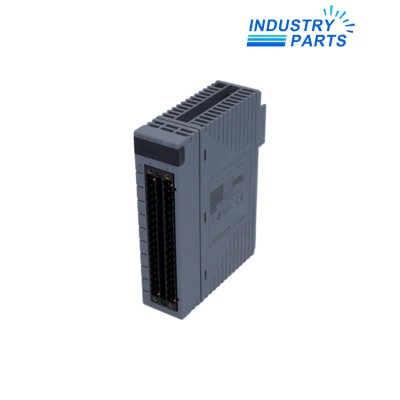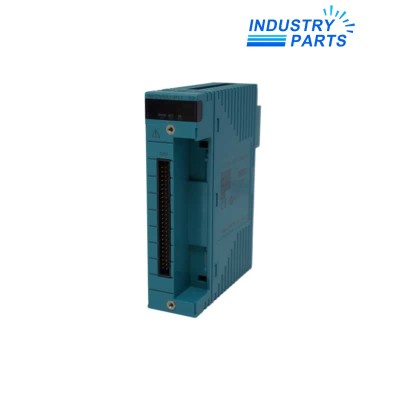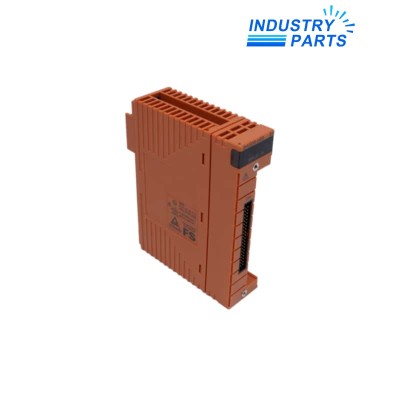



ABB DA501 Mixed Digital and Analog I/O Module
A high-density mixed I/O module combining discrete channels, configurable I/O, analog measurement, analog control and fast-counter capability.
Product Overview
DA501 brings multiple signal classes into one S500 expansion module. It combines fixed digital inputs, configurable digital channels, analog inputs for common process signals and resistance thermometers, and analog outputs for voltage or current control. Module-wise galvanic isolation and grouped diagnostics support practical panel integration.
Performance
- Consolidates digital sensing, configurable switching and analog processing in one module position.
- Uses signed twelve-bit conversion for both analog input and output functions.
- Supports voltage, current and RTD measurement through software-selected ranges.
- Provides a hardware fast-counter function on defined configurable channels.
- Uses individual signal indicators plus grouped error indications for local diagnosis.
Technical Details
| Manufacturer | ABB |
|---|---|
| Article Number | 1SAP250700R0001 |
| Product Family | AC500 S500 |
| Fixed Digital Inputs | 16 channels, 24 V DC |
| Configurable Digital I/O | 8 channels, 24 V DC, maximum 0.5 A |
| Analog Inputs | 4 channels for voltage, current or RTD |
| Analog Outputs | 2 channels for voltage or current |
| Analog Resolution | 12 bits including sign |
| Input Signal Ranges | 0 to 10 V; -10 to +10 V; 0 to 20 mA; 4 to 20 mA |
| RTD Types | Pt100, Pt1000, Ni100 and Ni1000 |
| Analog Output Ranges | -10 to +10 V; 0 to 20 mA; 4 to 20 mA |
| Fast Counter | Up to 50 kHz using assigned configurable channels |
| Terminal Units | TU515 screw or TU516 spring |
| Internal Supply Increment | 2 mA per module from the I/O-bus source |
| Product Lifecycle | Active |
System Integration
- Select TU515 or TU516 and wire the forty terminals according to the ABB channel assignment.
- Use shielded analog cabling and a low-resistance potential equalization arrangement to reduce measurement error.
- Configure every analog channel for its actual signal range and mark unused channels as unused where required.
- Supply the external process side through UP and ZP while the module electronics receive power from the I/O bus.
- Meet all ABB hot-swap conditions or isolate every voltage source before removing the module.
Applications
- Machine panels requiring mixed status inputs, configurable actuators and process analog signals.
- Temperature measurement with supported resistance thermometer types.
- Compact skids combining discrete interlocks with analog monitoring and control.
- Fast event counting on a compatible AC500 or communication-interface installation.
- Spare replacement where the original DA501 channel map must be retained.
FAQ
Which terminal units fit DA501?
ABB specifies TU515 with screw terminals or TU516 with spring terminals.
Can the analog inputs measure resistance thermometers?
Yes. Supported configurations include Pt100, Pt1000, Ni100 and Ni1000 ranges.
What must be done with unused analog channels?
Configure them as unused where ABB instructs this, preventing avoidable diagnostic messages.
Can DA501 be removed while powered?
Only when every documented hot-swap condition is satisfied; otherwise isolate all supply and signal voltages first.
Which channels are assigned to the fast counter?
ABB assigns DC16 and DC17 as counter inputs and DC18 as the associated output or control channel.
Why should analog cables be shielded?
Shielding and potential equalization reduce electromagnetic interference and ground-related measurement error.
Recommended Models
| ABB PM581 -ETH C3 1SAP140100R170 | M0257 | FSDDR0322 |
| MC70/MC75 | LT-840-350 | OK34A |
| EPX-410D | 0004A3C138EA | ABB 2CDG 110 168R0011 |
| ABB 2CDG 110 085 R0011 | 01984-0158-2015 | VAV-SD2A |
| 8/24-0, 5 203000001 | NUCPS-HK/1B | SXWUI16XX10001 SXWTBIOW110001 |
| 2CDG110171R0011 | 3-12/S1RY | TLU500 |
| B501 | ABB AI531 1SAP250600R0001 | 6ES7197-1LB00-0XA0 |
| Feb-00 | 5350CB | ABB UMC100.3 AC24L 1SAJ530000R2100 |
| TB3140W/U | 311025A | KJ2003X1-BA2 12P2093X112 |
| PTL-12-109 TLS-2200 | 2CDG110235R0011 | B&R X20CS1030 |