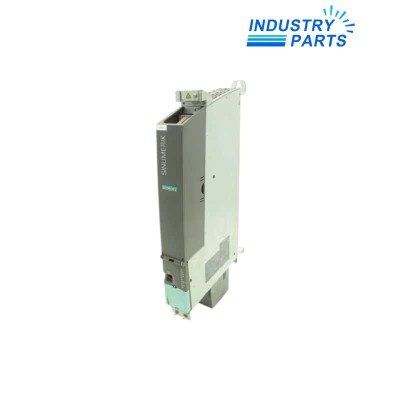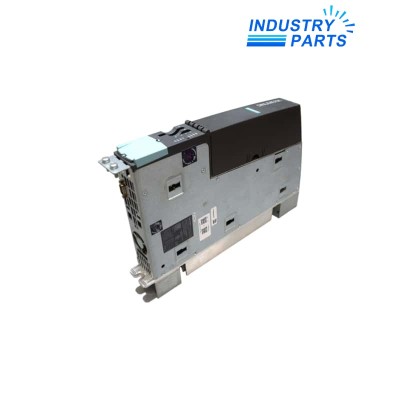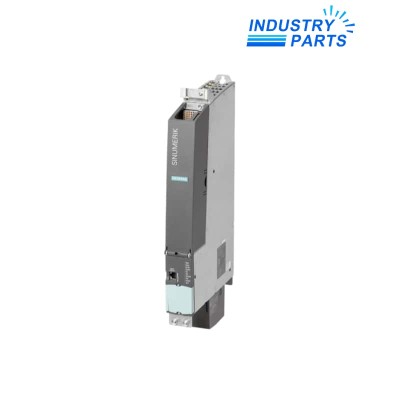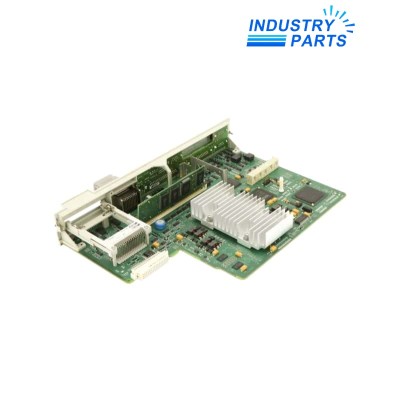



Allen-Bradley 1734-AENTR POINT I/O EtherNet/IP Adapter
A dual-port 10/100 Mbit/s POINT I/O adapter with an embedded switch for star, tree, linear and Device Level Ring network topologies.
Product Overview
1734-AENTR connects a POINT I/O station to EtherNet/IP through two RJ45 ports configured as an embedded switch. The dual-port design allows star and tree connections as well as daisy-chain, linear and ring architectures.
The adapter supports a POINT I/O node of up to sixty-three modules and provides 0.8 A at 5 V DC to the POINTBus. Expansion power supplies can segment field power and provide additional backplane current for larger stations.
Performance
- Transfers I/O data at 10 or 100 Mbit/s with half- or full-duplex communication.
- Provides two embedded-switch Ethernet ports for linear cabling and Device Level Ring participation.
- Supports direct, rack-optimized and enhanced rack-optimized EtherNet/IP connection methods.
- Delivers up to 0.8 A at 5 V DC to attached POINT I/O modules.
- Accommodates up to sixty-three modules on one EtherNet/IP node.
- Supports star, tree, daisy-chain, linear and ring network topologies.
Technical Details
| Manufacturer | Rockwell Automation |
|---|---|
| Brand | Allen-Bradley |
| Product Family | POINT I/O |
| Catalog Number | 1734-AENTR |
| Network | EtherNet/IP |
| Ethernet Ports | 2 RJ45 ports with embedded switch |
| Communication Rate | 10/100 Mbit/s, half or full duplex |
| Supported Topologies | Star, tree, daisy-chain, linear and ring |
| Maximum I/O Modules per Node | 63 |
| POINTBus Output | 5 V DC at maximum 0.8 A |
| Field Power Supply | 10 to 28.8 V DC at 10 A |
| Module Input | 1000 mA at 10 to 28.8 V DC |
| Maximum Power Consumption | 10.4 W at 28.8 V DC |
| Maximum Power Dissipation | 6.3 W at 28.8 V DC |
| Mounting | DIN rail |
System Integration
- Serves as the EtherNet/IP head adapter for POINT I/O nodes that require two network connections.
- Enables a linear connection between adjacent devices without a separate switch at every node.
- Supports Device Level Ring architecture when the complete ring is engineered with compatible devices and supervisor settings.
- Requires accurate chassis-size, module-order, IP-address and electronic-keying configuration in the controller project.
- Needs a backplane-current calculation because its 0.8 A POINTBus output differs from the 1.0 A rating of 1734-AENT.
Applications
- POINT I/O nodes installed along a linear EtherNet/IP machine network.
- Device Level Ring stations where network resiliency is part of the control design.
- Distributed I/O panels that use the adapter embedded switch to continue the network path.
- Dual-port replacement projects that must preserve ring or linear cabling.
- Remote Logix I/O stations using direct or rack-optimized connections.
FAQ
What is the practical difference between 1734-AENTR and 1734-AENT?
1734-AENTR has two embedded-switch ports and supports linear and ring topologies, while 1734-AENT has one port for star or tree layouts.
Can 1734-AENTR be used in a Device Level Ring?
Yes. Ring is one of the documented topologies for the dual-port adapter when the network is engineered accordingly.
What is the maximum POINTBus current from the adapter?
1734-AENTR supplies up to 0.8 A at 5 V DC to the POINTBus.
Does a sixty-three-module node always work without another power supply?
No. Sixty-three is the module-count limit; actual station size also depends on backplane current and field-power segmentation.
Why must chassis size be checked after replacement?
The adapter uses the configured station size and module order for the EtherNet/IP I/O connection.
What network records should be preserved?
Save the IP configuration, topology, ring settings, controller connection, module order, keying and POINTBus load calculation.
Recommended Models
| SEIMENS TXI1.OPEN | TT5000 | RB-HD1 |
| Gent 34700 | 70100AEP0N | ACJ-055-09 |
| MU210A | 2CDG120044R0011 | ABB DIM-LE 1.1400.0.10 |
| DVI1500S | P-300 05273-101S | EL4034 |
| 5014677 PC0904-21 | 6128-866-101 | RSS-24MCC-FR |
| ABB 3AXD50000010763 | FEX-40D-AMEU | TP-0416AS |
| ABB BE/S 8.24.1 2CDG110055R0011 | 97702345 | 2CKA006220A0029 |
| PCO1000CM0 | 3HE09327AARA01 ROHS6/6-40/85C | UC-5011 |
| 10083132 | GE 116B6708G43R73R4 | RMT/2 RMT2#A5LL000 |
| VE02ALR-2 | AC-1 plus / AC -1PLUSFT | SU/S 30.640.1 EIB |